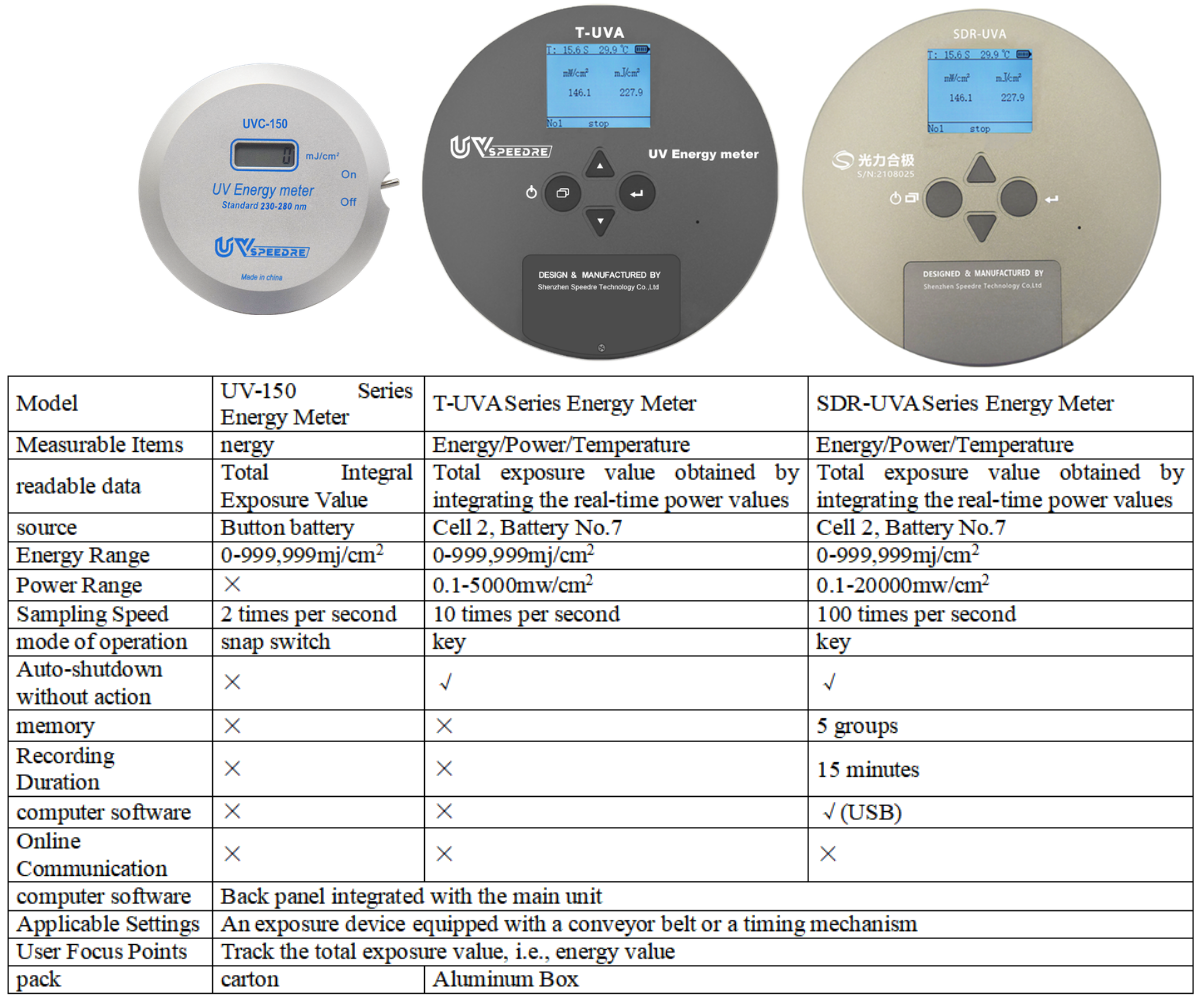
The UV energy meter is a specialized instrument designed for measuring ultraviolet (UV) radiation energy, with its core measurement unit being millijoules per square centimeter , enabling precise determination of total UV irradiation energy. Unlike UV irradiometers that only measure irradiance intensity , it serves as a fundamental tool for ensuring process consistency, verifying equipment performance, and guaranteeing product quality in UV application scenarios. Widely used in industrial curing, electronics manufacturing, printing and packaging, coating and film deposition, medical sterilization, photovoltaic testing, and other fields, it complies with industry standards such as GB/T and ISO for UV-related applications.
The UV energy meter is widely used in industrial UV curing, electronic manufacturing, printing and coating applications, as well as medical sterilization, photovoltaic processing, and equipment maintenance quality control. Compatible with multiple wavelength bands (UVA/UVV/UVB/UVC), it precisely controls the energy thresholds required for curing and sterilization processes, calibrates equipment, and ensures product quality, making it a standardized instrument for ultraviolet applications across industries. Its core applications and functions encompass critical stages such as industrial production, quality inspection, and equipment maintenance.
Ⅰ. Industrial UV curing
The most common applications of UV photometers include UV curing of adhesives, UV curing of coatings/ink, UV resin molding, and UV curing for 3D printing.
(1)Function: The mechanism of UV curing relies on ultraviolet energy reaching a specific threshold to achieve material solidification. Insufficient energy may result in adhesion issues, paint detachment, or ink flaking, whereas excessive energy can cause material yellowing, brittleness, and aging.
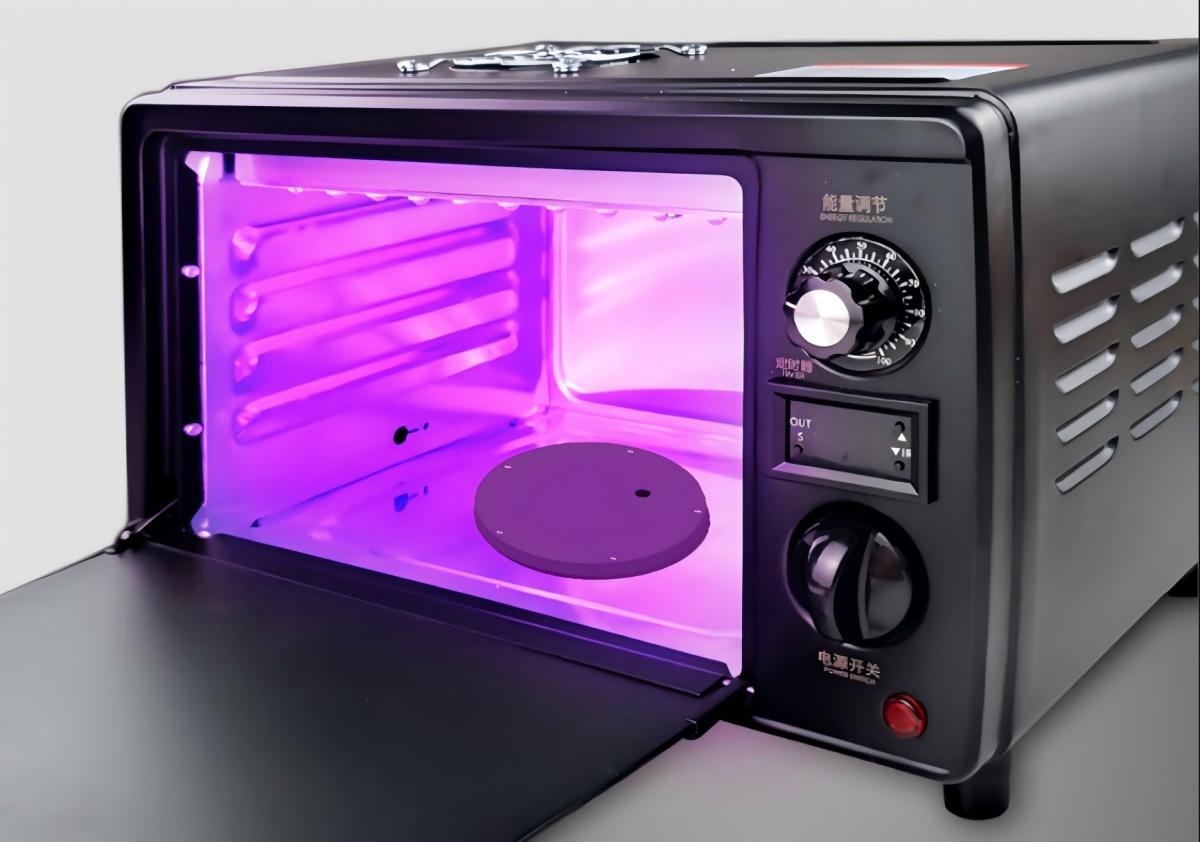
(2)Application: During production, place the UV energy meter at the workpiece position to simulate the manufacturing process, measure the actual irradiation energy of the UV curing oven/UV lamp array, and calibrate equipment parameters (e.g., conveyor belt speed, lamp power, lamp spacing) to ensure consistent curing energy across all batches and compliance with process standards.
Ⅱ. Electronic Manufacturing and Semiconductor Processing
It involves precision processes such as curing of three-proof coatings for PCB boards, curing of UV adhesives for electronic component packaging, and surface treatment of semiconductor wafers.
(1)Function: The electronics industry demands high curing precision; even minor energy deviations can affect the bonding strength, insulation properties, and temperature resistance of components, potentially leading to product failure.
(2)Application: The UV energy meter measures the ultraviolet radiation at precision workstations, eliminating energy inconsistencies caused by lamp aging, optical path obstructions, or temperature variations at workstations, thereby ensuring the reliability of electronic components.
Ⅲ. Printing, Packaging, and Coating Industry
Including flexographic/overprint UV ink printing, UV coating on packaging surfaces, UV painting for furniture and panels, and UV coating for automotive components.
(1)Function: Determines the adhesion, wear resistance, gloss of printed materials, as well as the hardness and scratch resistance of the coating layer.
(2)Application: Calibrate the energy parameters of UV printing machines and coating lines before batch production, conduct regular monitoring during operation to prevent quality fluctuations caused by UV lamp aging (light decay), and standardize process specifications across different production lines and equipment.
Ⅳ. Medical Disinfection and Laboratory Testing
The application scenarios cover equipment UV disinfection, laboratory microbial culture UV sterilization, and food packaging UV sterilization (mainly in the UVC band).
(1)Effect: The efficacy of UV disinfection directly depends on the cumulative irradiation energy. Insufficient energy fails to eliminate bacteria and viruses, leading to ineffective disinfection.
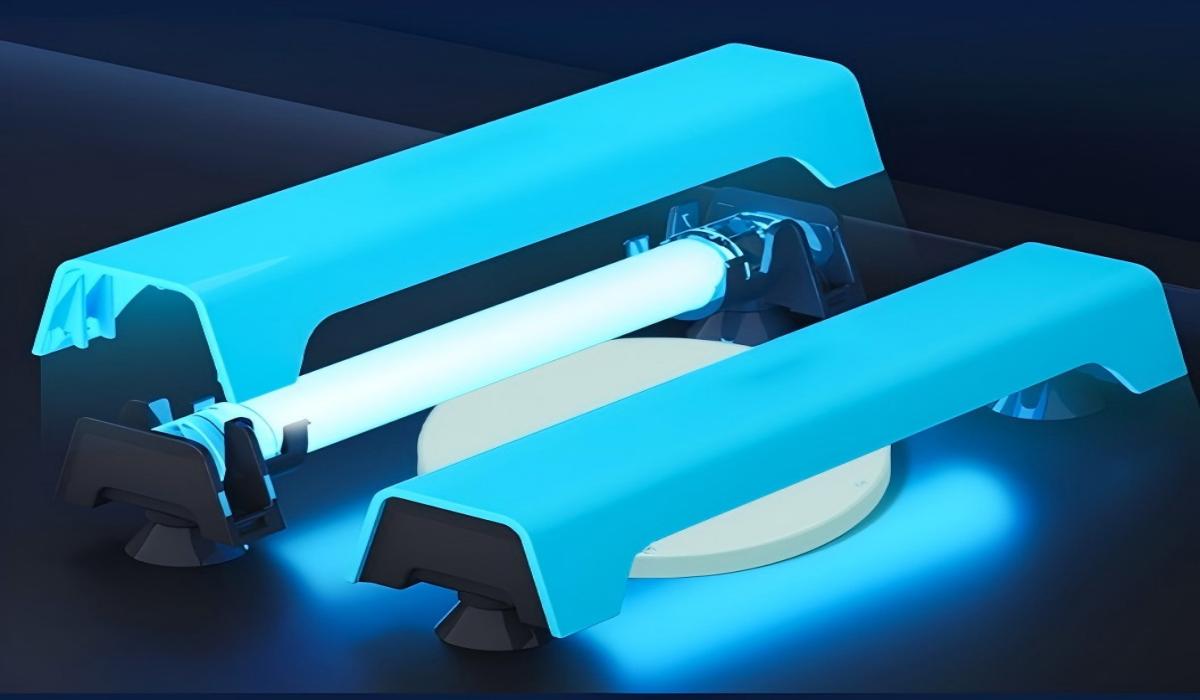
(2)Application: Measures the actual irradiation energy of UV disinfection lamps and sterilizers to verify whether the disinfection process complies with national standards (e.g., UVC energy threshold for medical disinfection), and determines whether the disinfection lamp requires replacement due to insufficient energy output caused by light degradation.
Ⅴ. Photovoltaics, Glass, and Plastic Processing
UV curing of anti-reflection coatings on photovoltaic cell surfaces in the photovoltaic industry; UV coating/ink curing of glass; UV modification/bonding of plastic components.
(1)Function: Ensures structural stability and performance durability of photovoltaic modules and glass components; for instance, the adhesion of the film layer on photovoltaic cells directly impacts power generation efficiency.
(2)Application: Conducts targeted UV energy measurement on large-scale production lines to address energy non-uniformity during extensive irradiation, ensuring consistent overall product performance.
Ⅵ. Maintenance of UV Equipment and Quality Traceability
As a daily inspection tool for UV equipment, it covers the entire lifecycle of the device.
(1)Assess the light decay of UV lamps: After use, UV lamps gradually experience light degradation—while power ratings remain normal, actual energy output is insufficient. An energy meter enables precise determination of the replacement interval.
(2)Verify optical path/reflective hood performance: Aging or dust accumulation in the reflector hood can cause energy loss; the energy meter can detect such issues to facilitate timely maintenance.
(3)Quality traceability basis: The measurement data from the energy meter are recorded and archived as the quantitative evidence for product quality compliance, meeting industry quality control requirements.
From daily inspection on production lines to precision verification in laboratories, SPEEDRE UV series energy meters meet all your requirements, laying a solid foundation for standardized and reliable operation of UV processes. The compact and portable UV-150 series enables rapid inspection of curing energy, allowing production personnel to calibrate parameters instantly on assembly lines and prevent batch rework due to energy deviations; the T-UV series features a color LCD display that dynamically shows irradiation energy variation curves, providing precise control references for energy-sensitive applications such as electronic manufacturing and precision coating, effectively ensuring component bonding strength and coating adhesion; the SDR-UV series offers both four-channel and single-channel versions, maintaining high accuracy even during prolonged continuous monitoring—serving not only as quality traceability evidence in fields like photovoltaics and medical sterilization but also meeting ISO and GB/T industry standard compliance requirements through data recording.