Among the various components of a smartphone, the camera lens may appear to be merely a simple piece of transparent glass, but it is actually a sophisticated optical component that significantly impacts key user experiences such as photography quality, screen display, facial recognition, and sensing functionality. Testing its transmittance for both infrared and visible light is crucial for ensuring lens quality and overall phone performance. Transmittance simply refers to the proportion of light that passes through the lens. Since smartphones rely on both visible light (perceptible to the human eye) and infrared light (unseen by the eye) to perform different functions, and given that these two types of light operate in entirely distinct scenarios with different requirements, precise testing must be conducted separately to ensure the lens meets demands for accurate imaging, fast focusing, responsive sensing, and eye-friendly screen operation.
Visible light, being the type of light perceivable by the human eye, directly impacts a smartphone's display performance and image quality. The higher the visible light transmittance of the screen cover, the clearer, more transparent, and more uniformly bright the display becomes—improving visual comfort while reducing power consumption and heat generation caused by forced brightness increases. Similarly, the visible light transmittance of the camera lens protector directly determines the amount of light entering the camera; sufficient transmittance results in brighter images with richer details and more accurate colors, minimizing noise and blurriness in night photography, whereas insufficient transmittance leads to dimmer images, degraded picture quality, and color distortion. Thus, testing visible light transmittance is fundamentally aimed at ensuring that smartphones deliver clear and high-quality visuals.
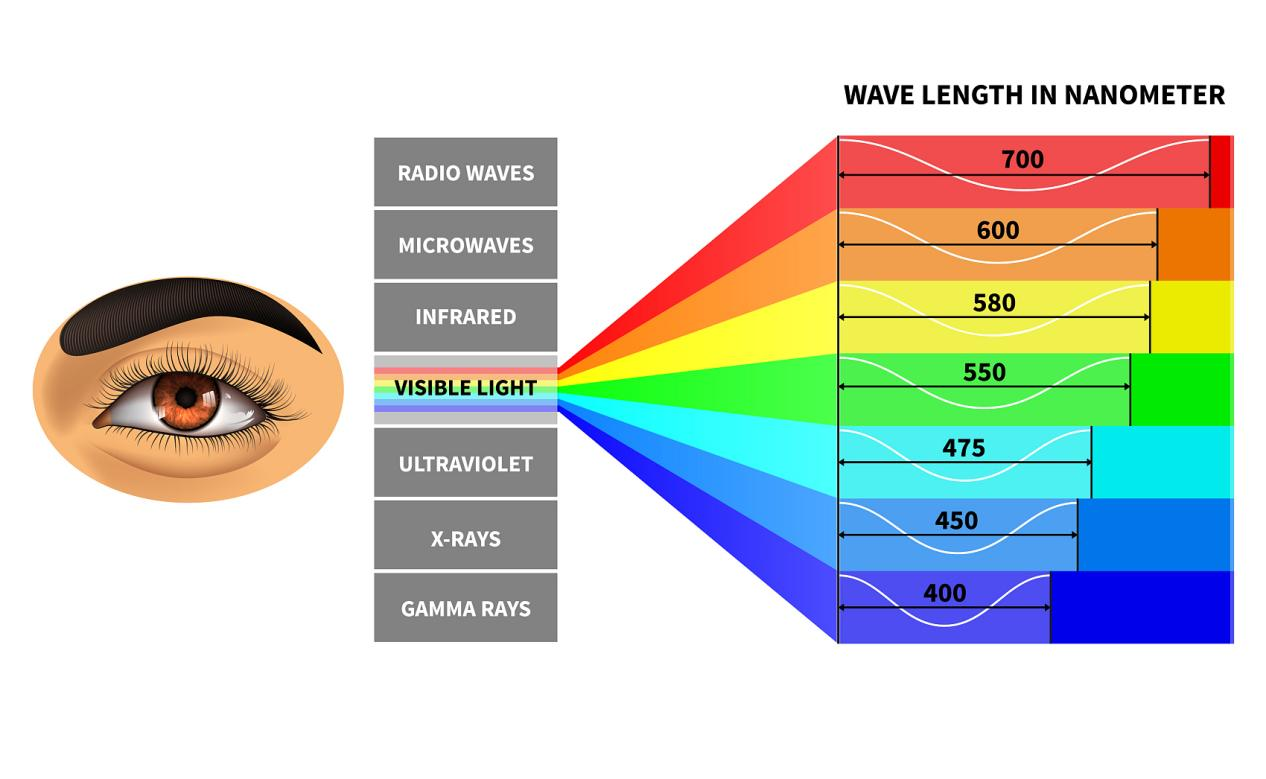
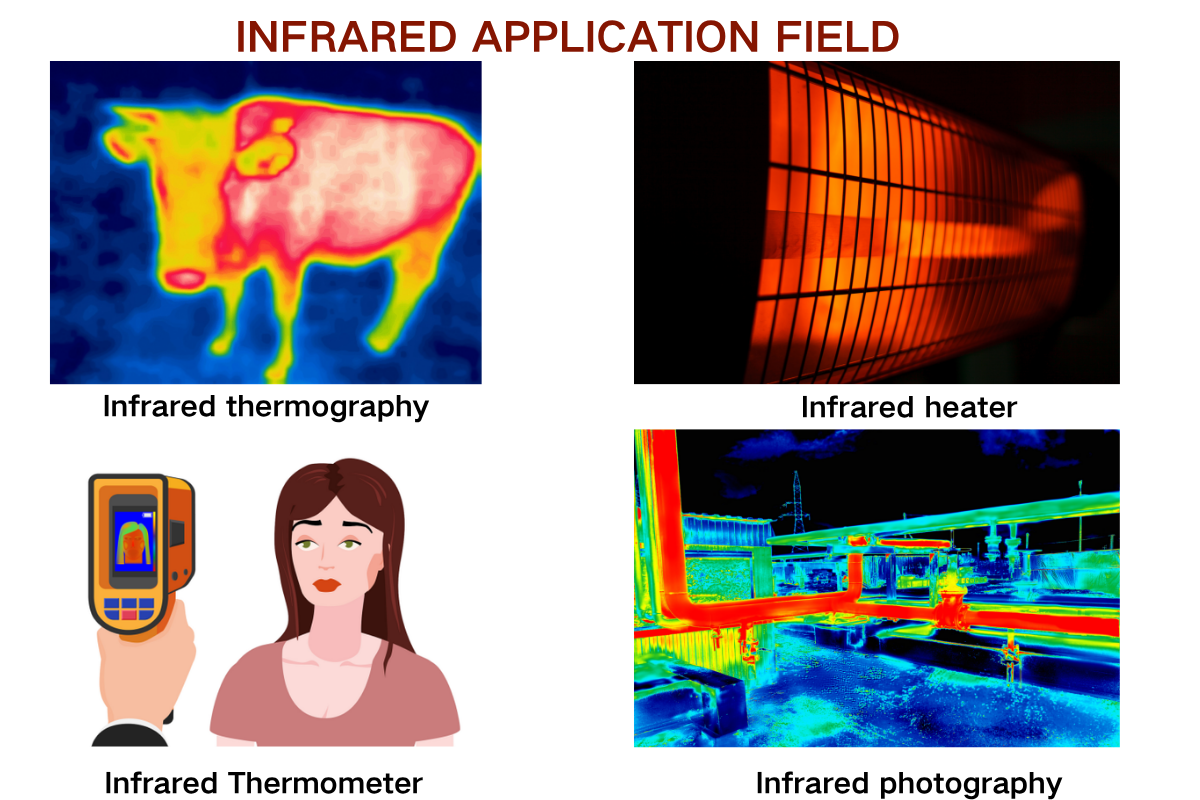
Although infrared light is imperceptible to the human eye, it serves as a fundamental prerequisite for smartphones to achieve intelligent functionalities. Features such as facial recognition, distance sensing, ambient light detection, and night-time autofocus all rely on the emission and reception of infrared light. This necessitates that the corresponding lens elements have an appropriate transmittance for infrared light to ensure stable signal transmission; otherwise, issues may arise including slow unlocking, failed recognition, failure to darken the screen when holding the phone close during calls, or abnormal automatic brightness adjustment. Additionally, camera sensors are highly sensitive to infrared light; excessive infrared radiation entering the lens can cause image whitening, reduced contrast, and color distortion. Therefore, lens elements must precisely filter infrared light and strictly control its transmittance. It is precisely these specific requirements that make infrared transmittance testing indispensable, as it directly determines the sensitivity and operational stability of various smartphone sensing functions.
Mobile phone lenses are not ordinary glass with a single function, but composite optical components that balance visual performance and intelligent sensing capabilities. Testing only visible light transmittance cannot ensure proper operation of infrared-related functions; testing solely infrared transmittance fails to meet the image quality requirements for both screens and cameras. Only by conducting simultaneous tests for both infrared and visible light transmittance can the lens's optical performance be fully verified, thereby preventing functional failures at the source and enhancing overall device quality – which is precisely why these two tests are essential in the industry for mobile phone lenses.
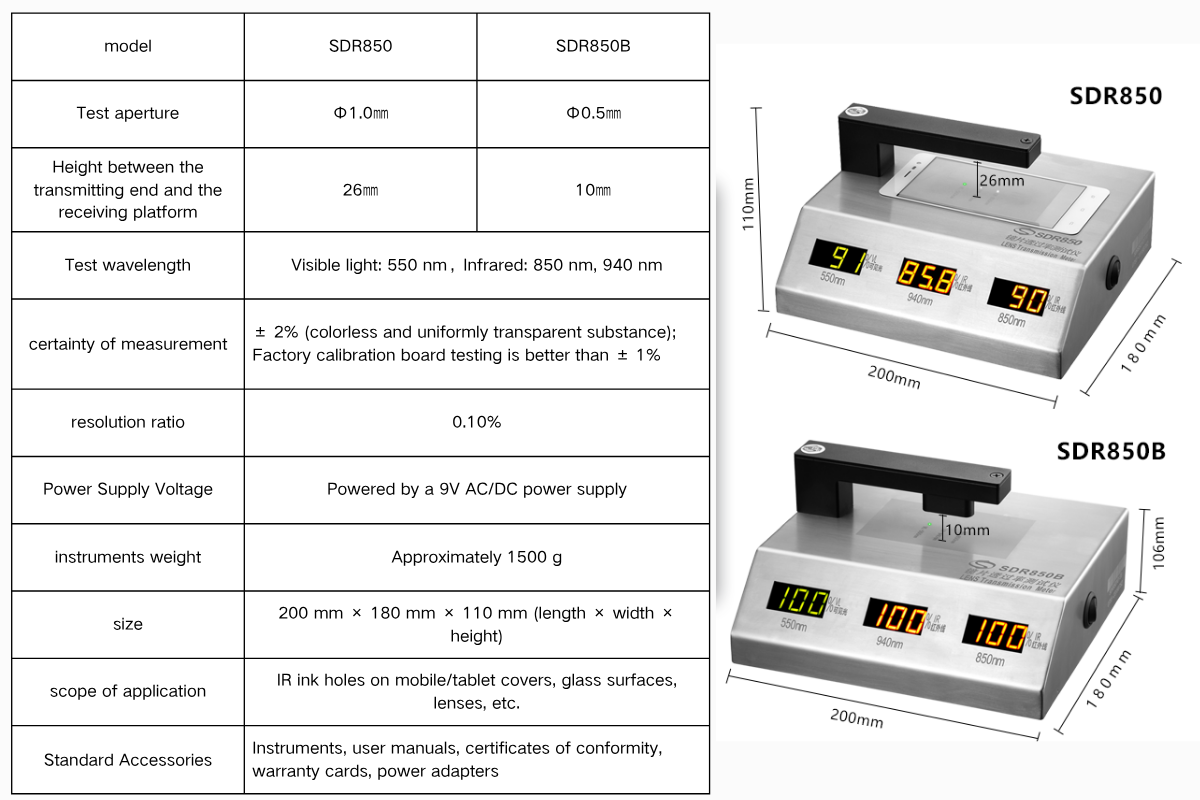
The SDR850 Lens Transmittance Tester is a specialized equipment designed for testing optical components such as smartphone lenses, covers, and IR ink holes. It accurately measures transmittance across three critical wavelength bands: 550 nm visible light, 850 nm, and 940 nm infrared, perfectly meeting the dual requirements of visible-light imaging and infrared sensing for smartphone lenses. Equipped with real-time dynamic automatic calibration technology, the instrument automatically calibrates to 100% transmittance upon startup without frequent manual adjustments. Capable of measuring even minute apertures as small as φ1.0 mm, it delivers rapid, stable, and precise data output that clearly demonstrates lens performance across different wavelengths—ensuring clear visible-light imaging and transparent screen display while rigorously controlling infrared transmission. This ensures reliable optical quality assurance for core smartphone functions including facial recognition, distance sensing, auto brightness adjustment, and camera imaging. Its integrated desktop design offers user-friendly operation and high stability, making it the ideal solution for lens production, quality inspection, incoming material verification, and quality control.