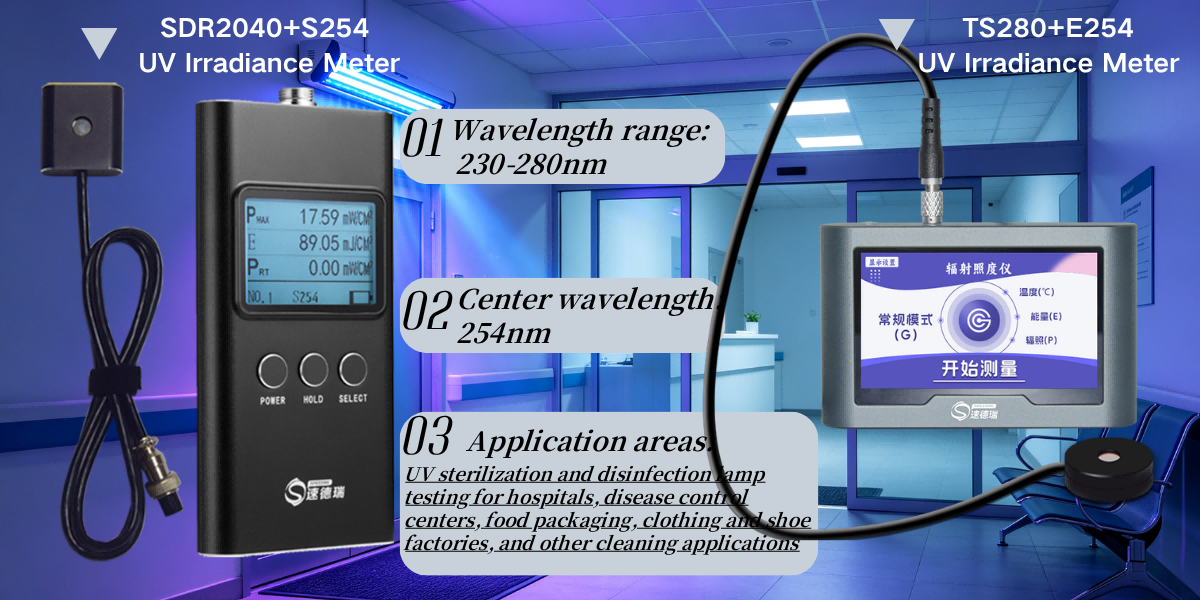
Ultraviolet (UV) disinfection lamps are widely used devices for eliminating bacteria and viruses; owing to their high efficiency and residue-free sterilization properties, they have become a critical line of defense in public health. However, UV disinfection lamps do not become effective immediately upon activation. Over time, the lamp tubes may undergo aging, exhibit reduced light output, accumulate dust, and experience diminished light transmission. Should the irradiation intensity fall below the required standards, a lamp tube that appears to be functioning normally may in fact fail to achieve the desired sterilization and disinfection effects, potentially creating gaps in hygiene and disinfection coverage.
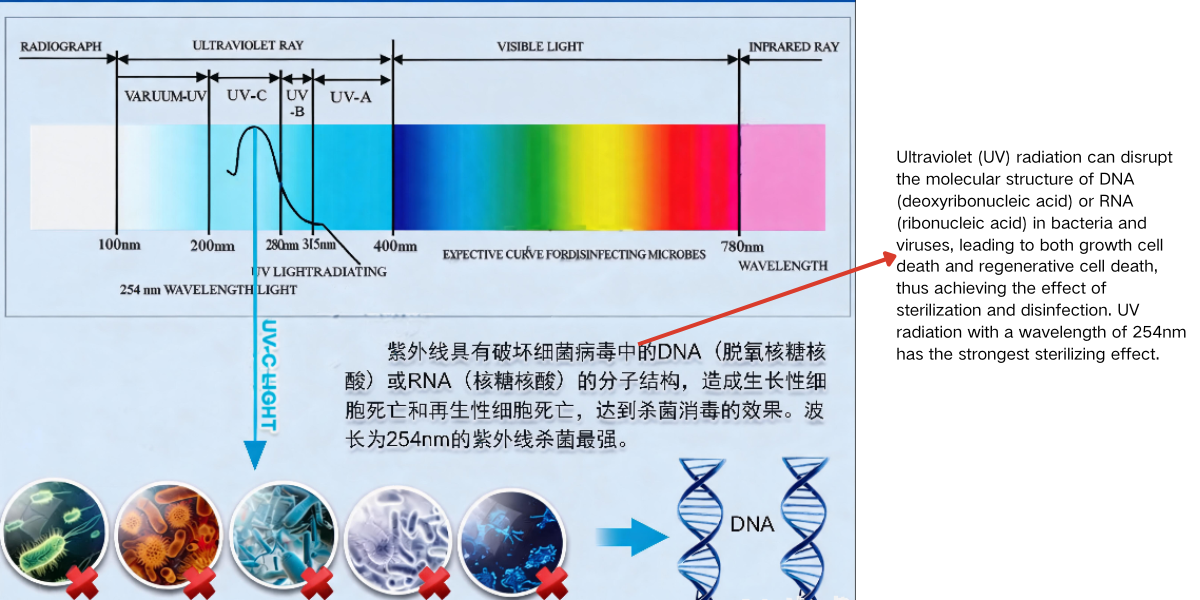
According to the standard "WS/T 367-2012 Technical Specification for Disinfection in Medical Institutions," the bactericidal efficacy of ultraviolet disinfection lamps depends on the irradiance of short-wave ultraviolet radiation at 253.7 nm, which constitutes the critical wavelength range for microbial inactivation. There are two commonly employed methods for determining the irradiance of 253.7 nm ultraviolet lamps: the ultraviolet irradiance meter measurement method and the ultraviolet intensity indicator card monitoring method.
① Ultraviolet irradiance meter determination method
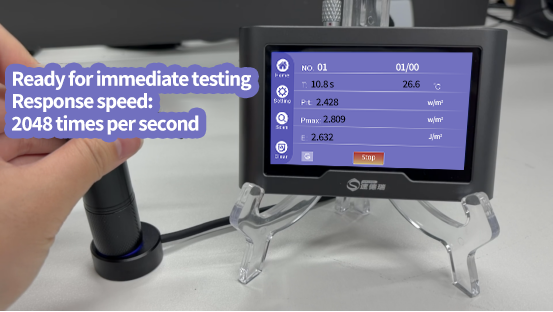
After turning on the ultraviolet lamp for 5 minutes, place the ultraviolet irradiometer probe – with a measurement wavelength of 253.7 nm – at the center point, 1 m vertically below the lamp being tested. For special ultraviolet lamps, measure the irradiance at the recommended operating distance. Once the instrument has stabilized, the displayed value represents the irradiance of that ultraviolet lamp.
② Ultraviolet intensity exposure indicator card monitoring method
After turning on the ultraviolet lamp for 5 minutes, place the indicator card at a vertical distance of 1 m below the ultraviolet lamp, with the side bearing the pattern facing upward; expose the card for 1 minute. Following the ultraviolet irradiation, observe the color of the color patches on the indicator card, compare it with the standard color patches, and determine the irradiation intensity.
③ Result Evaluation
For ordinary 30W straight-tube ultraviolet (UV) lamps, the irradiation intensity of new lamps should comply with the requirements of GB19258; during use, UV lamp irradiation intensity of ≥70μW/cm2 is considered qualified; for new 30W high-intensity UV lamps, an irradiation intensity of >180μW/cm2 is considered qualified.
④matters need attention
During testing, the voltage shall be 220 V ± 5 V, the temperature shall be 20 ℃–25 ℃, and the relative humidity shall be <60%. The ultraviolet irradiance meter shall be used within its validity period as certified by the metrology authority; the indicator card shall have obtained the health approval certificate for disinfection products issued by the Ministry of Health and shall be used within its validity period.
Among compliance testing devices, the Speedre’s TS280+E254 and SDR2040+S254 ultraviolet (UV) irradiance meters are specialized instruments designed for monitoring the intensity of UV disinfection lamps, complying with the latest national standards such as WS/T 368—2025 and WS/T 10050—2026. Their core models are specifically optimized for the dedicated 253.7 nm UVC sterilization wavelength band; their spectra and angular characteristics have been professionally calibrated to precisely filter out irrelevant stray light interference, making them ideally suited for monitoring conventional low-pressure mercury UV disinfection lamps. These devices feature a portable design with a separate main unit and probe head, are equipped with high-definition digital display screens, and support real-time measurement data storage and playback. Their measurement accuracy is stable and controllable, meeting the quantitative traceability requirements for monitoring in medical institutions, third-party annual inspection filings, and routine inspections in public venues. Additionally, these instruments offer user-friendly operation and broad compatibility, balancing the precision required for professional testing with the convenience needed for daily screening. Consequently, they have become widely adopted compliance UV intensity testing tools in the sterilization and disinfection industry.